

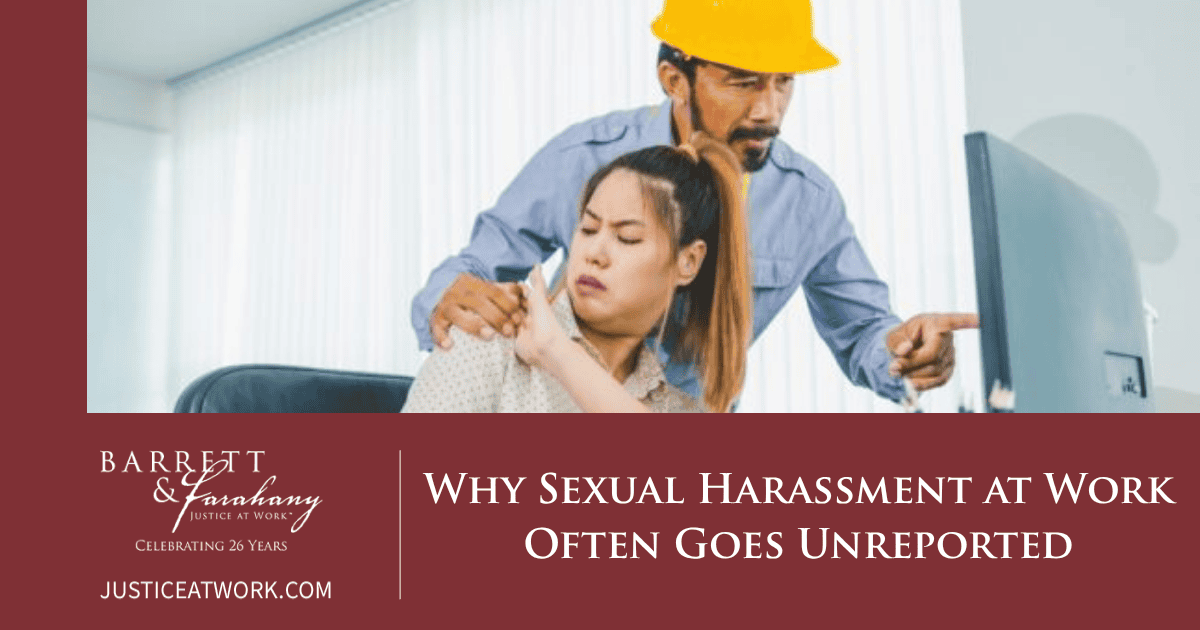
Why Workplace Sexual Harassment Often Goes Unreported
Unreported workplace sexual harassment occurs primarily because victims fear severe professional retaliation, including job loss or demotion. Additionally, victims frequently lack confidence in human resources systems, experience intense psychological trauma, face stark power imbalances, and feel uncertain about what specific behaviors actually constitute illegal harassment.
Workplace sexual harassment remains a silent epidemic across industries. Despite increased public awareness and updated corporate policies, countless employees continue to suffer without ever filing a formal complaint. Understanding why unreported sexual harassment persists requires looking closely at the deep-rooted fears, organizational failures, and psychological barriers that silence victims.
At Barrett & Farahany, our legal team fights tirelessly for justice in employment law. We witness firsthand the devastating impact of unreported workplace sexual harassment. Our attorneys understand the complex reasons why individuals hesitate to come forward. We are committed to dismantling these barriers and helping victims reclaim their voices, their careers, and their dignity.
Why do employees fail to report workplace sexual harassment?
Employees often fail to report workplace sexual harassment because they fear retaliation, lack confidence in reporting systems, worry about career consequences, experience shame or self-doubt, or are uncertain whether the conduct violates workplace policies or employment laws.
1. What is the Chilling Effect of Retaliation in the Workplace?
The most common reason victims of sexual harassment remain silent is the intense fear of retaliation. When an employee experiences harassment, they immediately weigh the cost of speaking up against the cost of staying quiet. Often, the professional and social backlash seems far more damaging than enduring the abuse.
Speaking up about harassment can lead to devastating career consequences. Victims frequently face poor performance reviews, stalled career progress, or demotions. Peers and leadership teams might unfairly label the reporting employee as “difficult” or “not a team player.”
This social ostracism isolates the victim, making the daily work environment unbearable. The real-world implications of losing a steady income or damaging a hard-earned career path create a powerful chilling effect that keeps harassment hidden.
2. Why do Victims Lack Confidence in Organizational Reporting Systems?
Many victims believe that filing an official report with human resources or management will achieve absolutely nothing. If an organization has a history of sweeping severe issues under the rug or consistently failing to discipline known offenders, employees will naturally lack the trust necessary to come forward.
Furthermore, some companies lack clear, accessible reporting channels. Employees may not know whom to contact if their direct supervisor is the actual harasser. When companies fail to establish transparent, accountable human resources processes, workers assume that reporting is futile. This lack of confidence protects harassers and perpetuates a toxic corporate culture.
3. How Does the Psychological Toll and Self-Blame Silence Victims?
The psychological impact of sexual harassment extends far beyond the incident itself. Harassment frequently leads to overwhelming feelings of guilt, shame, and self-doubt. Instead of blaming the perpetrator, victims often internalize the abuse.
Victims may minimize the severity of the incidents or actively question their own memories of the event. A targeted employee might ask themselves if they somehow encouraged the behavior or if they are simply overreacting.
This profound embarrassment often leads individuals to endure the hostile environment in silence, hoping the inappropriate behavior will eventually stop on its own.
4. How Do Power Dynamics and Vulnerability Prevent Reporting?
Unreported workplace sexual harassment frequently involves a stark power imbalance. When the harasser holds a position of authority — such as a direct supervisor, a high-level executive, or a major client — victims feel exceptionally vulnerable.
The harasser controls the victim’s livelihood, project assignments, and professional reputation. This coercive power dynamic effectively silences victims. The threat of losing a job or being blacklisted within an industry forces many employees to tolerate the abuse rather than risk complete financial ruin.
5. Why Does Ambiguity Regarding Harassment Stop Formal Complaints?
Employees are often uncertain about what specific actions define a hostile work environment. Harassment does not always involve explicit physical contact; it can include inappropriate jokes, persistent unwanted advances, or subtle coercion.
Because of this ambiguity, victims might delay reporting until the behavior escalates to a dangerous level. Additionally, employees often lack basic knowledge regarding the formal complaint escalation paths within their specific company. Without clear definitions and straightforward guidelines, victims remain paralyzed by uncertainty.
6. What are the Statistics on Unreported Workplace Sexual Harassment?
Statistical data reveal a massive gap between the prevalence of workplace harassment and the number of reported cases. Research conducted by the U.S. Equal Employment Opportunity Commission (EEOC) highlights that roughly three out of four individuals who experience harassment never report the incidents to a supervisor, manager, or union representative.
This staggering EEOC statistic illustrates that the vast majority of workplace harassment remains completely invisible to corporate leadership and legal authorities. The data underscores the urgent need for better reporting mechanisms, stronger legal protections, and a massive shift in corporate accountability.
7. How can Victims of Sexual Harassment Take Action?
You do not have to navigate the aftermath of workplace harassment alone. Taking legal action holds abusers accountable and forces organizations to create safer work environments for everyone.
If you have experienced sexual harassment at work, contact the experienced employment attorneys at Barrett & Farahany for immediate support. While we place a strong emphasis on representing victims throughout North Carolina, our dedicated legal team serves clients far beyond the state borders. We will listen to your story, protect your rights, and help you determine the best path forward.
Taking steps to break the silence
The reasons behind unreported sexual harassment are complex, deeply personal, and deeply systemic. Overcoming the fear of retaliation, navigating broken human resources systems, and fighting through self-doubt requires immense courage.
Creating safer workplaces demands that organizations implement supportive reporting avenues and enforce strict anti-retaliation policies. Breaking the silence starts with believing victims, providing robust legal support, and holding perpetrators fully accountable for their actions. The attorneys at Barrett & Farahany are here to help.
Frequently Asked Questions
1. What should I do if HR ignores my sexual harassment complaint?
If human resources ignores your sexual harassment complaint, you should immediately document all correspondence with HR, gather evidence of the harassment, and consult an employment lawyer. An external legal team like Barrett & Farahany can help you file a formal claim with the EEOC or pursue a civil lawsuit.
2. Can I be fired for reporting sexual harassment at work?
No, it is illegal for an employer to fire you in retaliation for reporting workplace sexual harassment. The law protects employees who file complaints in good faith. If your employer terminates your employment after a report, you may have strong grounds for a wrongful termination and retaliation lawsuit.
3. How much time do I have to file a sexual harassment claim?
Timelines for filing a sexual harassment claim vary by state and jurisdiction. Generally, you have 180 days from the date of the last incident to file a charge with the EEOC, though this deadline extends to 300 days in states with specific local anti-discrimination laws. You should consult an attorney immediately to ensure you do not miss critical filing deadlines.