

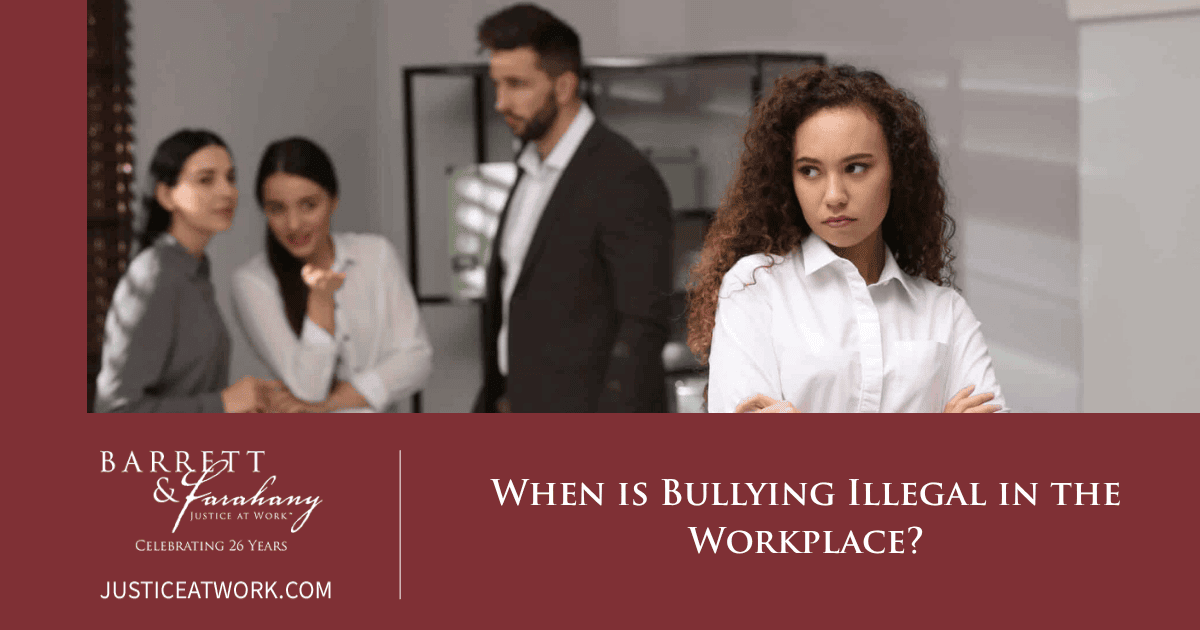
When Does Workplace Bullying Cross the Line?
Workplace bullying can make your job feel unbearable. It might involve insults, isolation, or even sabotage, creating a toxic atmosphere that harms your mental health and career. But is it illegal? While many forms of mistreatment at work are unfair, they don’t always break the law. This can be confusing and leave victims feeling powerless.
The employment law attorneys at Barrett & Farahany will clarify when bullying in the workplace crosses the line from unprofessional behavior to illegal harassment. We’ll explore the legal definitions, explain what constitutes a hostile work environment, and outline the concrete steps you can take if you are a target. Understanding your rights is the first step toward reclaiming your peace and professional dignity.
Defining Illegal Workplace Bullying
Not all bullying is illegal, but it becomes unlawful when it turns into harassment targeting an individual’s protected characteristics. Federal and state laws protect employees from discrimination based on specific attributes. When workplace bullies target you because of these traits, their actions may be illegal.
What are Protected Characteristics?
Bullying becomes unlawful harassment when it is motivated by a person’s membership in a protected class. These categories are defined by anti-discrimination laws to prevent unfair treatment. Key protected characteristics include:
- Race: Targeting someone due to their racial background or associated traits.
- Gender: Includes sex, gender identity, and sexual orientation. Mistreatment based on stereotypes or non-conformance with gender norms can be illegal.
- Religion: Discriminating against an individual because of their religious beliefs or practices.
- National Origin: Harassing someone based on their ethnicity, ancestry, or country of origin.
- Disability: Targeting an employee due to a physical or mental disability.
- Age: Unfair treatment of employees who are 40 years of age or older.
- Genetic Information: Using genetic information (such as family medical history) as a basis for adverse employment actions.
If bullying is tied to one of these characteristics, it is no longer just poor behavior—it is a form of illegal discrimination.
What is a Hostile Work Environment?
For bullying to be considered illegal harassment, it must be significant enough to create what the law calls a “hostile work environment.” This legal standard ensures that minor annoyances or isolated incidents don’t automatically trigger legal action. Instead, the behavior must be serious and impactful.
A hostile work environment is created when the bullying conduct is so severe or pervasive that a reasonable person would find the workplace intimidating, abusive, or offensive. Let’s break down those terms:
- Severe: This refers to the seriousness of the conduct. A single, extremely offensive incident, such as a physical assault or a racial slur, may be severe enough to create a hostile environment on its own.
- Pervasive: This describes the frequency of the behavior. A pattern of less severe but repeated actions can add up to create a hostile environment. Examples include daily insults, mockery, or consistent interference with your work.
The conduct must fundamentally alter the conditions of your employment and make it difficult to perform your job. Examples of behavior that can contribute to a hostile work environment include:
- Offensive jokes, slurs, epithets, or name-calling
- Physical assaults or threats
- Ridicule or mockery
- Insults or put-downs
- Displaying offensive objects or pictures
- Work sabotage or interference with work performance
Ultimately, the key is whether the behavior is severe or pervasive enough to create an atmosphere that a reasonable person would find hostile and abusive.
What to Do If You’re Being Bullied
If you are facing bullying in the workplace, especially if you believe it is illegal, taking strategic action is crucial. Here are the steps you should follow to protect yourself and build a case.
1. Document Everything
Keep a detailed, private record of every incident. For each event, write down:
- The date and time it occurred.
- Where it happened.
- Who was involved (the bully and any witnesses)?
- A specific description of what was said or done.
- How the incident made you feel and how it impacted your work.
Save any relevant emails, text messages, or physical evidence. This documentation is powerful evidence that establishes a pattern of behavior and will be invaluable if you decide to take formal action.
2. Report the Bullying
Review your company’s employee handbook to understand its policy on harassment and reporting procedures. Follow the official process, which usually involves reporting the behavior to your supervisor, a human resources representative, or a designated manager.
When you file a report, do so in writing (such as an email) so you have a record of it. Be professional and stick to the facts you’ve documented. Reporting the conduct gives your employer a chance to investigate and resolve the issue. It is also a necessary legal step if you plan to pursue a claim later.
3. Seek Legal Counsel
If the bullying continues after you’ve reported it, or if you are unsure about your rights, it’s time to speak with an attorney. An employment lawyer can help you understand whether the behavior you’re experiencing is illegal and explain your legal options.
They can provide guidance on navigating your company’s internal processes and, if necessary, help you file a formal complaint with government agencies like the Equal Employment Opportunity Commission (EEOC).
Know Your Rights and Take Action
No one should have to endure a hostile or abusive work environment. While not all workplace bullies break the law, it’s vital to recognize when their actions cross into illegal harassment. By understanding the link between bullying, protected characteristics, and a hostile work environment, you can better protect yourself.
If you have encountered discrimination, sexual harassment, or other illegal conduct in the workplace, know that you have legal recourse. At Barrett & Farahany, we are dedicated to ensuring fair treatment for all employees across nine states and the District of Columbia, including Georgia, Alabama, and Illinois.
Contact our skilled employment lawyers today to schedule a consultation and learn about your options.