

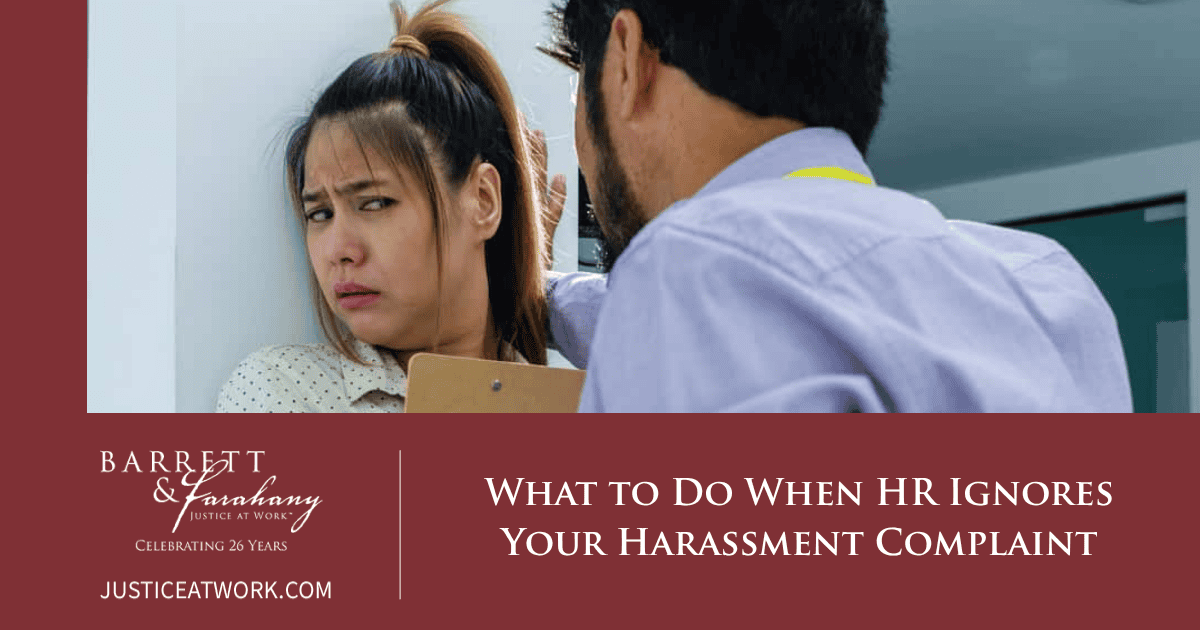
HR Ignored Your Sexual Harassment Complaint — Now What?
Quick answer: If HR dismisses your sexual harassment complaint, document all incidents and HR’s inaction, escalate the issue internally, file a charge with the EEOC within 180–300 days, and consult an employment attorney. Federal law Title VII of the Civil Rights Act protects you from retaliation and provides a legal path forward.
You reported workplace sexual harassment to HR. You expected them to act. Instead, your complaint was brushed aside, delayed, or outright ignored. This is a deeply frustrating situation — and unfortunately, it happens more often than it should. The good news? HR dismissing your complaint is not the end of the road.
Here’s what you can do next with help from the attorneys at Barrett & Farahany.
What Should You Do First When HR Dismisses a Sexual Harassment Complaint?
Document Everything Meticulously
Before taking any other step, build your paper trail. Record each incident in chronological order — include exact dates, times, what was said or done, and the names of any witnesses present. Save emails, text messages, and copies of any written complaints you submitted.
If HR met with you verbally and took no action, send a follow-up email summarizing the conversation and requesting a status update. This creates a written record of both the harassment and HR’s inaction, which can be critical evidence later.
Escalate Internally
A single unresponsive HR representative does not mean the entire organization has been notified. Escalate your sexual harassment complaint to a higher-level manager, corporate HR, or your company’s internal legal counsel. Clearly state that your previous complaint was not addressed.
Keep copies of every communication you send during this process.
How Do You Protect Your Rights After Filing an HR Sexual Harassment Report?
Federal law prohibits employers from retaliating against employees who report discrimination. Under Title VII of the Civil Rights Act, it is illegal for your employer to fire, demote, reassign, or harass you in response to your complaint.
If your working conditions change after you file — watch for sudden negative performance reviews, reduced hours, or exclusion from meetings — document these incidents immediately with dates and details.
Filing a Charge with the EEOC
When your company fails to act, the U.S. Equal Employment Opportunity Commission (EEOC) is your next step. Filing a formal Charge of Discrimination puts your complaint on record at the federal level.
Two key time limits apply:
- 180 calendar days from the date of the last incident of harassment if you are filing only with the EEOC
- 300 calendar days if you are also filing with a state or local agency
Missing these deadlines can forfeit your right to take legal action, so act promptly. You can begin the process through the EEOC Public Portal.
Why Should You Consult an Employment Attorney About Your HR Sexual Harassment Response?
An employment attorney who has experience in workplace discrimination can help you in ways that HR — and even the EEOC — cannot. Barrett & Farahany can assess whether HR’s inaction violates federal law, help you meet critical filing deadlines, and ensure that key evidence is preserved correctly.
Many employment law cases hinge on procedural details. Having an attorney involved early significantly strengthens your position.
Your Voice Deserves to Be Heard
HR ignoring a sexual harassment complaint does not erase your rights — it activates them. Document, escalate, file with the EEOC, and seek legal counsel. Each step builds a stronger foundation for accountability.
If your HR sexual harassment complaint has been dismissed or ignored, Barrett & Farahany is here to help. Our experienced employment attorneys can review your situation, explain your options, and fight to ensure your rights are protected. Contact Barrett & Farahany today for a free consultation.