

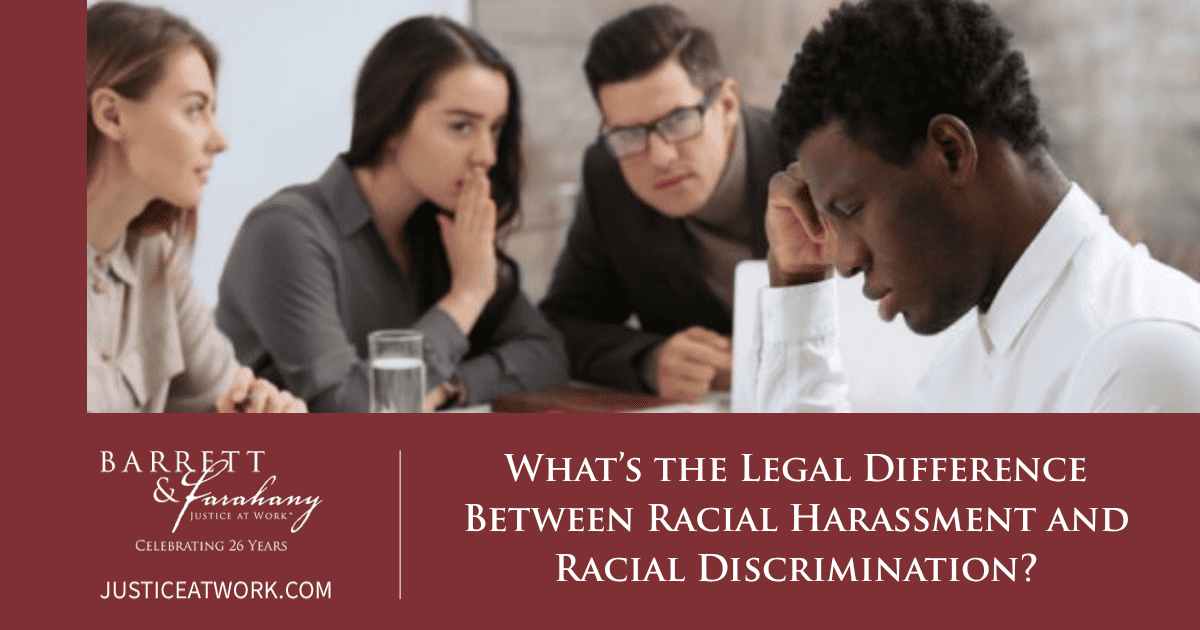
Racial Harassment vs. Racial Discrimination: The Legal Difference
Quick answer: Racial discrimination is an adverse employment decision based on race, such as refusing to hire or denying a promotion. Racial harassment is a pattern of unwelcome, race-based conduct that creates a hostile work environment. Both are illegal under Title VII of the Civil Rights Act of 1964.
The terms “racial harassment” and “racial discrimination” often get used interchangeably, but they describe two different legal problems. Understanding the distinction matters if you believe your rights have been violated at work. The type of harm you experienced shapes the kind of claim you can bring and the evidence you will need.
While racial harassment is legally treated as a specific form of discrimination under Title VII, the two show up differently in legal claims and everyday workplace situations. The workplace discrimination attorneys at Barrett & Farahany break down each concept, offer clear examples, and explain how federal law protects you from both.
What Is Racial Discrimination in the Workplace?
Racial discrimination happens when a person is treated unequally or unfavorably in the terms, conditions, or privileges of employment based on race, skin color, or associated physical traits. The focus is on tangible, adverse actions that affect your job. Common examples include:
- Refusing to hire a qualified candidate because of race
- Denying a deserved promotion or raise
- Terminating an employee based on race or skin color
- Paying lower wages for the same work
- Assigning undesirable shifts or work based on race
Racial discrimination can take the form of a single, intentional decision, or it can result from a policy that appears neutral but disproportionately harms employees of a certain race. According to the U.S. Equal Employment Opportunity Commission (EEOC), Title VII prohibits employers with 15 or more employees from making employment decisions based on race or color.
What Is Racial Harassment in the Workplace?
Racial harassment involves unwelcome verbal, visual, or physical conduct tied to a person’s race or ethnicity. To be illegal, the conduct must be severe or pervasive enough to create an intimidating, hostile, or offensive work environment. Common examples include:
- Using racial slurs
- Telling offensive racial jokes
- Displaying racist symbols or graffiti
- Mocking someone’s cultural traits or accent
Harassment usually requires a persistent pattern of behavior. However, a single incident can qualify if it is extraordinarily severe. The core issue is the atmosphere the conduct creates, not a specific employment decision. Under Title VII, employees are protected from harassment based on race or skin color.
What Laws Protect You From Racial Harassment and Discrimination?
Two federal laws provide the main protections against race-based mistreatment at work.
- Title VII of the Civil Rights Act of 1964 prohibits employment discrimination based on race and color. It covers employers with 15 or more employees and extends to hiring, firing, pay, promotions, and harassment. Employers also cannot make decisions based on stereotypes or assumptions about racial characteristics.
- Section 1981 of the Civil Rights Act of 1866 prohibits discrimination based on race or color in the making of contracts. Unlike Title VII, Section 1981 applies to all employers with no minimum number of employees, and claims can be filed without first going through the EEOC.
Under these laws, race or color cannot influence pay, benefits, bonuses, or any other form of compensation. Both protect the same goal: a workplace where race plays no role in how you are treated.
How Are Racial Harassment and Racial Discrimination Different?
The simplest way to tell them apart is to look at what the wrongful conduct targets. Racial discrimination targets a concrete employment decision, like a promotion, a paycheck, or a job offer. Racial harassment targets the environment itself, wearing down an employee through repeated hostile behavior.
Choose to frame your situation as discrimination if you suffered a specific adverse action, such as being fired or passed over. Frame it as harassment if you faced ongoing slurs, jokes, or intimidation that made your workplace unbearable. Many cases involve both, which is why speaking with an employment attorney can help clarify your options.
Get Help With Your Racial Harassment or Discrimination Claim
If you have experienced racial harassment or racial discrimination in the workplace, you do not have to face it alone. Keep in mind that most employees have just 180 days to file a charge with the EEOC, so acting quickly matters.
The employment attorneys at Barrett & Farahany can review your situation, explain your rights, and guide you through every step of the process. Contact Barrett & Farahany today for a complimentary consultation and the legal support you deserve.
Frequently Asked Questions
Is Racial Harassment a Type of Racial Discrimination?
Yes. Racial harassment is legally treated as a specific form of racial discrimination under Title VII of the Civil Rights Act of 1964. The difference is that harassment focuses on creating a hostile environment, while discrimination focuses on adverse employment decisions.
Can a Single Incident Count as Racial Harassment?
Usually, racial harassment requires a persistent pattern of behavior. However, a single incident can qualify as harassment if it is extraordinarily severe.
Does Title VII Apply to Every Employer?
No. Title VII applies only to employers with 15 or more employees. Section 1981, on the other hand, applies to all employers regardless of size and does not require filing with the EEOC first.
How Long Do I Have to File a Racial Discrimination Claim?
Most employees have just 180 days to file a charge with the EEOC. Because deadlines are strict, it is best to contact an employment attorney as soon as possible.